Milo's Patina Monsters
Category: Footwear
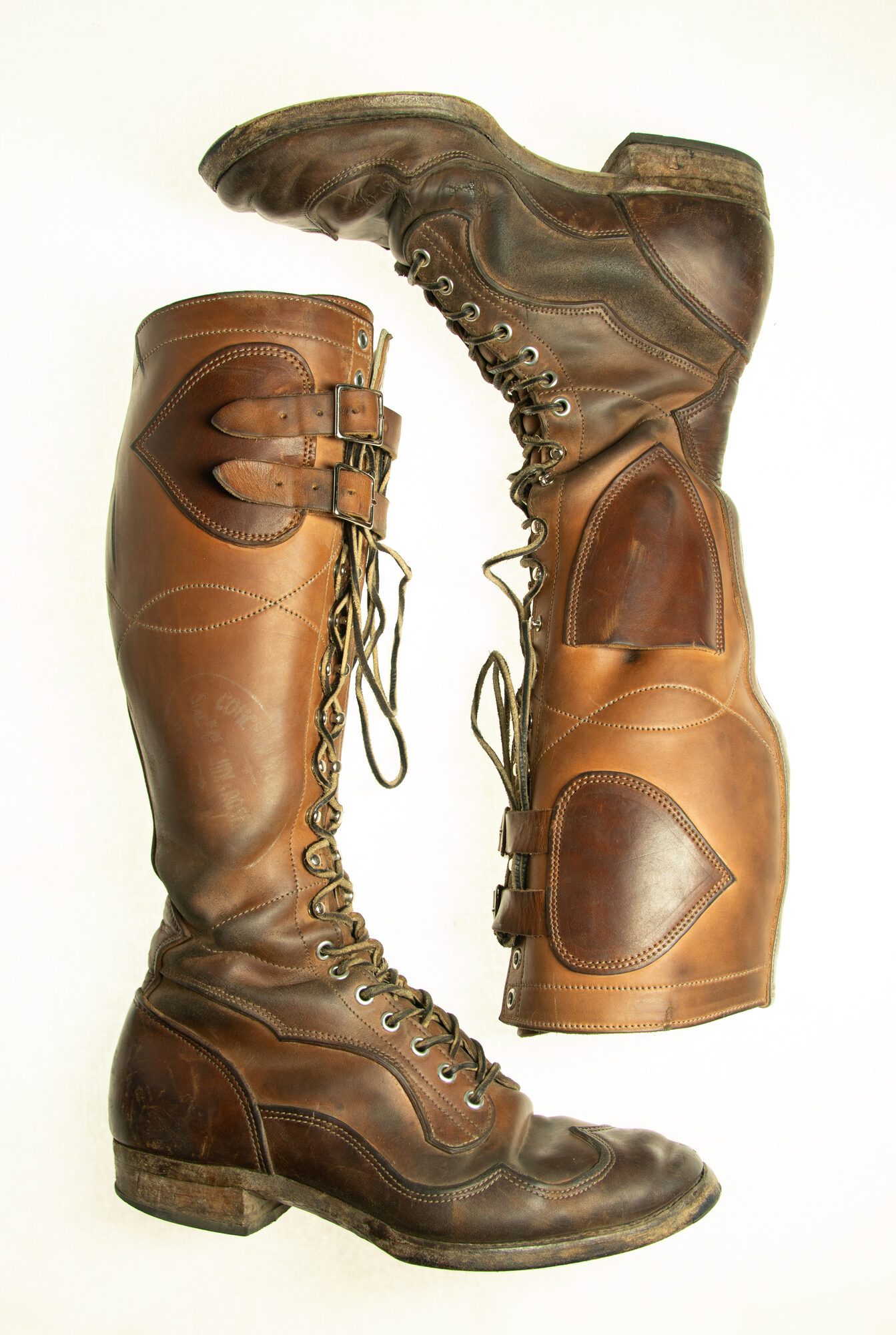
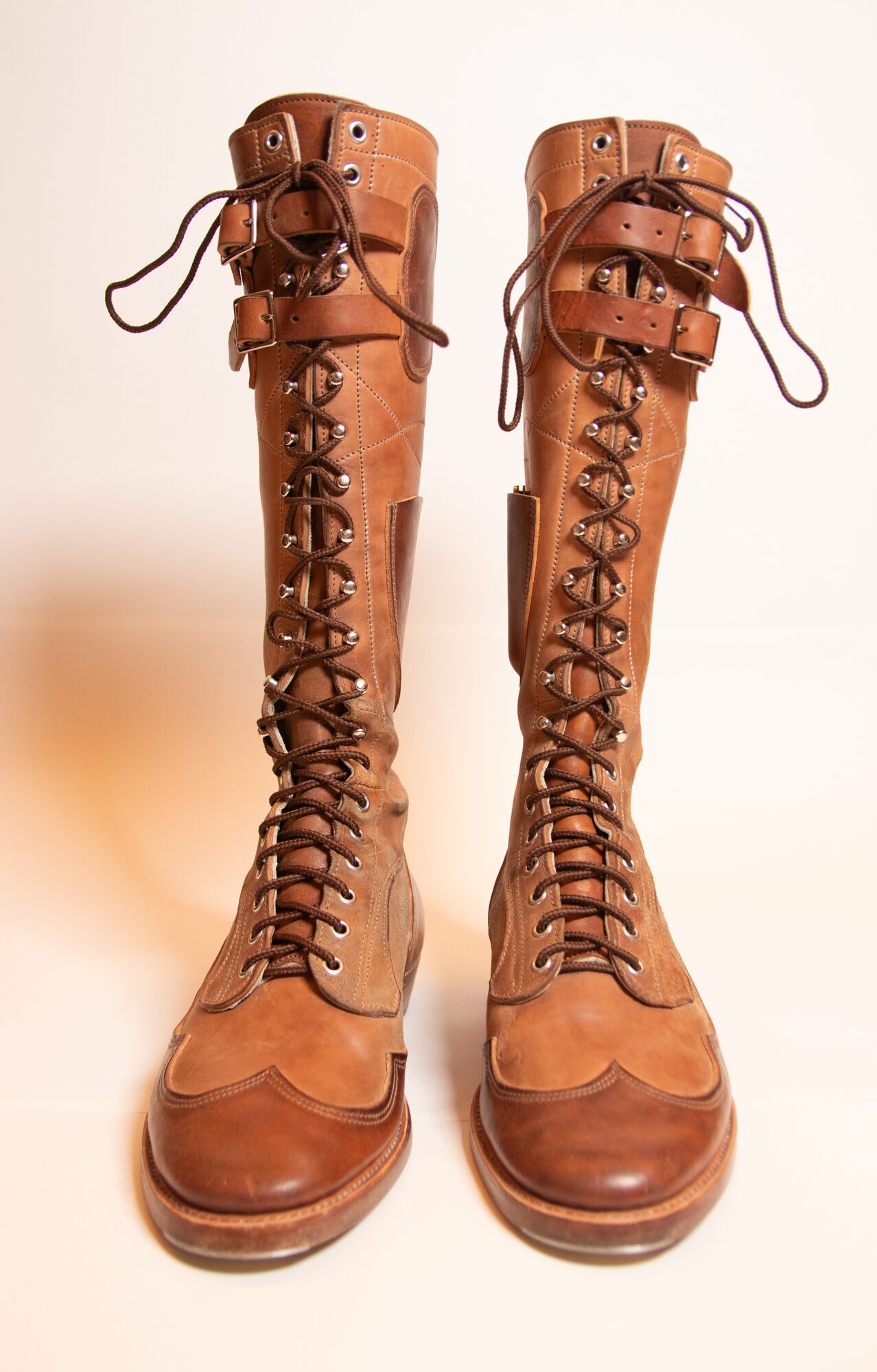
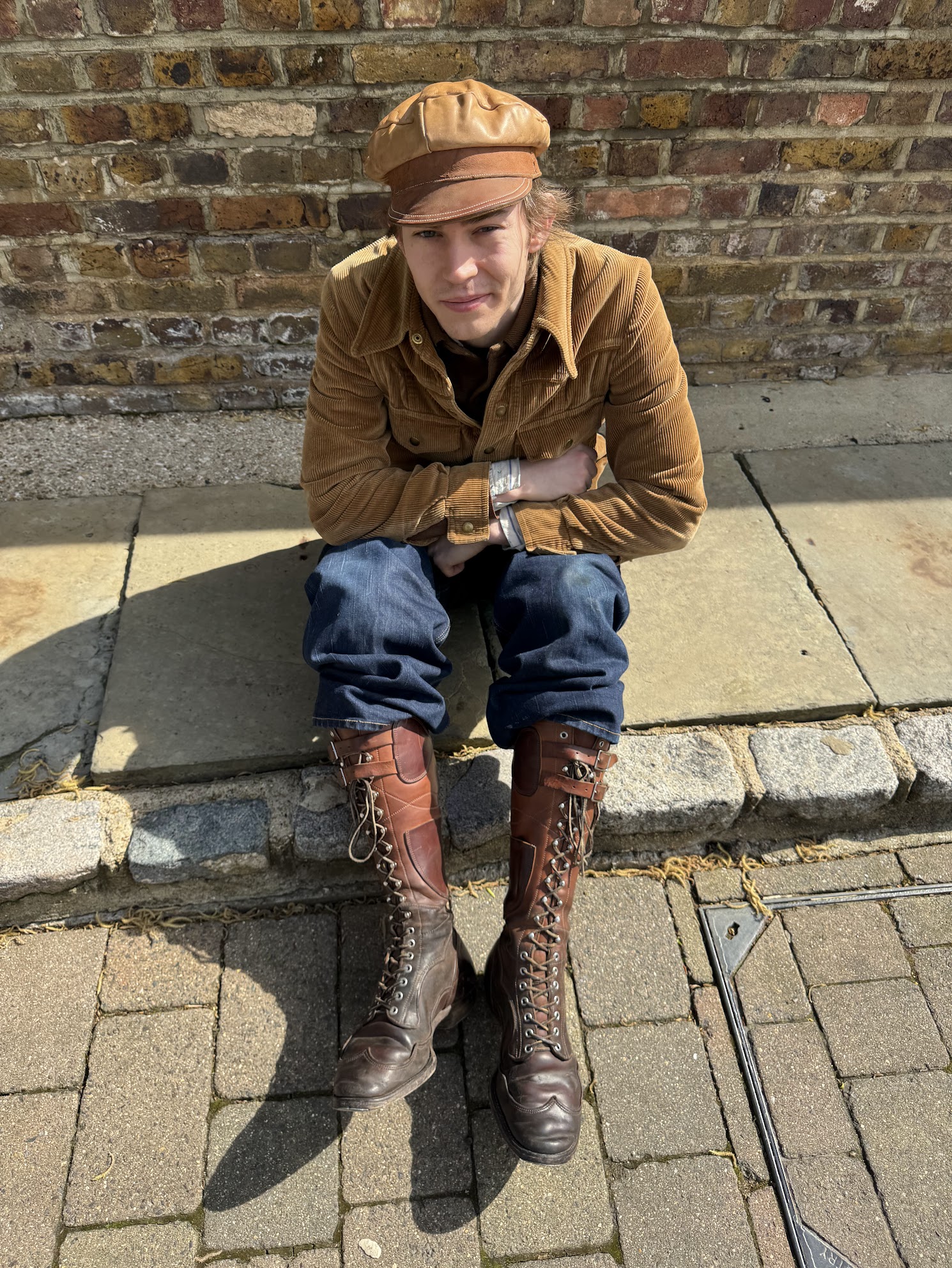
The Patina Monsters are designed and inspired by 1920s hunting boots. I find it interesting that there was a time when tall boots were considered masculine and worn for the most demanding outdoor tasks, built for longevity and repair. I also love the unique design details common through the 1910s and '20s, and I have wanted to incorporate the triple wingtip design into a pair of boots for a while, adding my own spin. My design solution was simple: add a swoop like a lace-to-toe boot, but instead of having it emerge from the derby curve, make it come out of the counter. This visually grounds the boot, especially since these details are in a contrasting color. I did not want the derby curve to interfere with this detail, but play off it, so I made it extend out of the backstay in a sweeping motion. This reinforces the visual distinction between the top and bottom of the boot while adding a pocket of negative space on the vamp. In this "neutral zone," the curves play off each other but remain distinct. I also made the facings curve at a similar radius as lace-to-toe boots and reinforced this unusual decision by keeping the stitching around the eyelets and vamp seam from interacting. Moving to the upper, I designed an oversized teardrop shape from which the buckles emerge, harmonizing with the almond-shaped pockets. These are visually strong elements that contrast the lower boot while echoing its dynamic nature. To create visual continuity, I added decorative stitching from the backstay point, forming a reflected shape that balances the back stay. Decorative loop top stitching further up the shaft bridges the top and lower portions, while dividing the shaft into two distinct zones so the boot pocket and buckle patch read as intentional anchors rather than floating elements. For leather, I chose Guidi culatta, selected for exceptional and unpredictable aging characteristics. The shell, grain side, and flesh-out sections each develop differently over time, only getting better with age. I expected a strong tea-core effect in the brown top grain and the reverse side darkening significantly. The unstructured toe box would collapse and roll with wear, growing more personal with every use. This is a boot designed to become more itself and visually distinct over time. The bottom construction follows the cowboy boot traditional approach for its durability and elegance. The beveled waist and thick leather sole are a careful balance between dress and work. Edge finishing is natural; the wax adds protection while still allowing for natural darkening with wear. These boots are a visual expression of my design sensibility, my construction preferences, and a considered speculation about what will patina best. They are built to be worn hard, repaired when needed, and offer a statement on design values. The antithesis of disposability, which is currently the standard for the footwear industry. This project was an investigation on historical design approaches which are sustainable and rooted in tradition. With my design work, I actively question the current industry approaches, research historical approaches, and imagine a future where historical design solutions could be employed to meet the demands of the present. I believe sustainability and ethical production is possible in the footwear industry through standardization, mass production, and automation. The first step to a sustainable future is designing for graceful aging and wear, for footwear to get better with age.
 Copy URL
 Login to Like 0