Anima in Animus
Category: Apparel
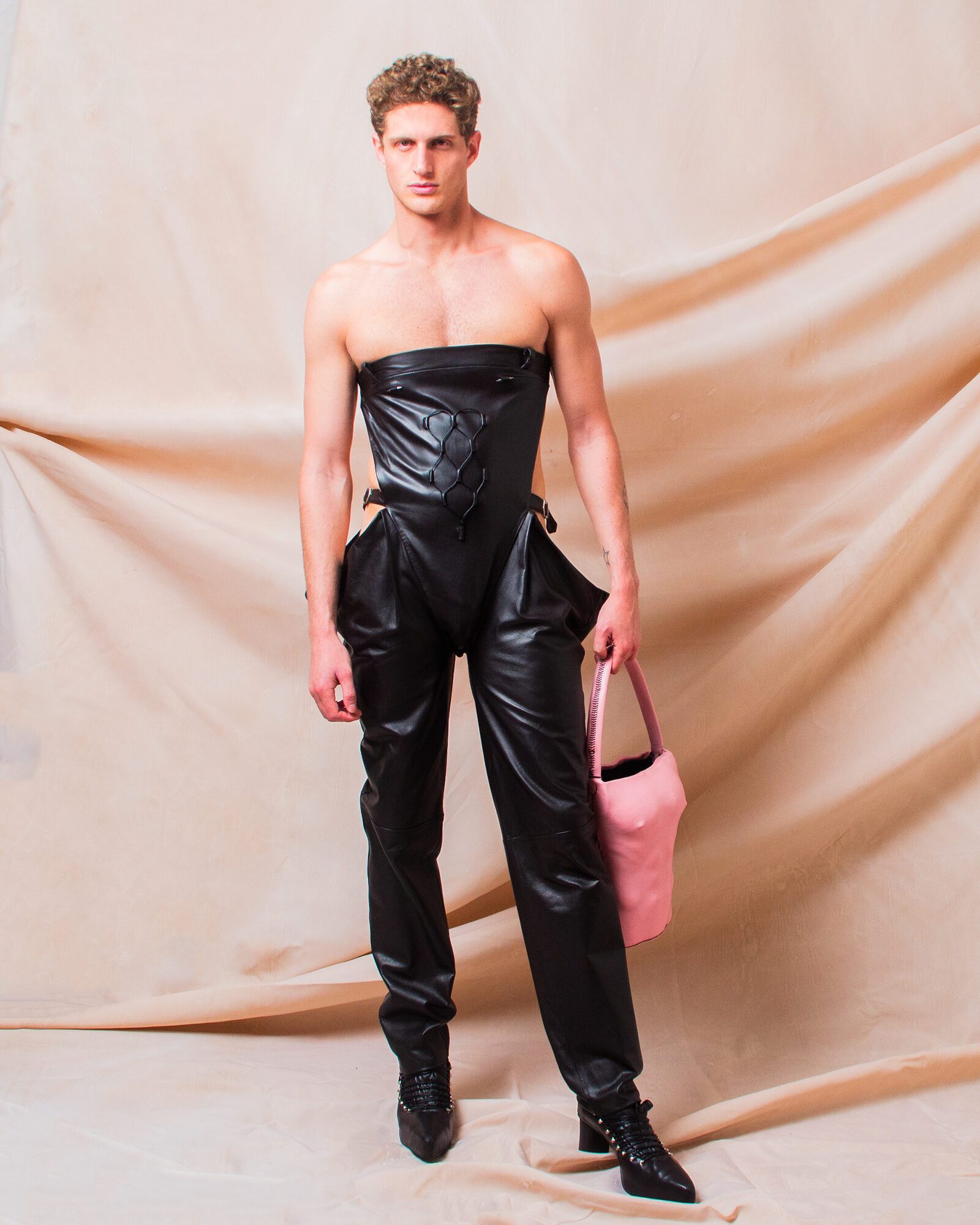
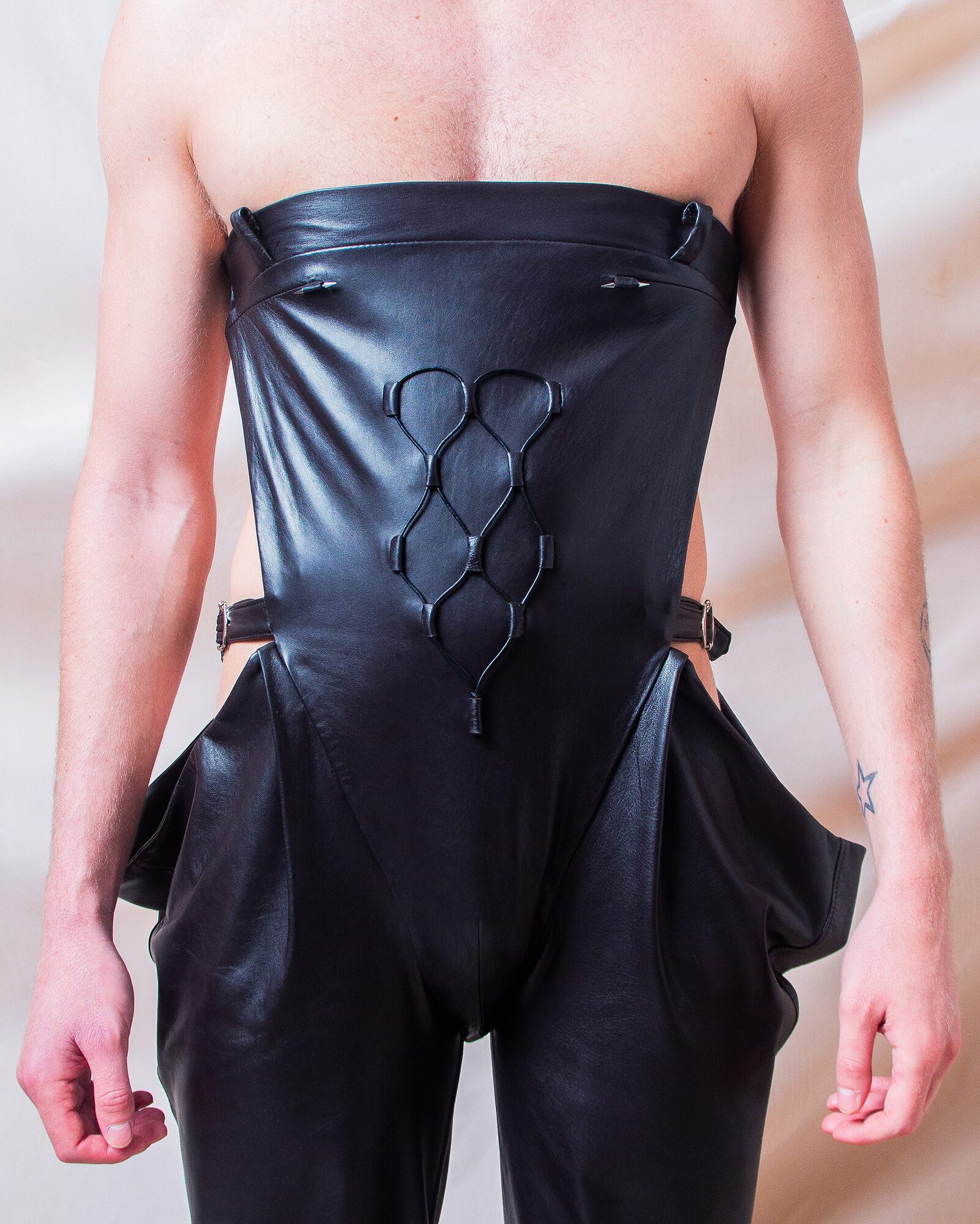
The leather jumpsuit is part of the Anima in Animus collection, a project that investigates the transformation of traditional masculinity through historical dress, military symbolism, and contemporary identity. The garment reinterprets the fifteenth-century hose, the historical predecessor of modern trousers. Unlike contemporary pants, hose consisted of separate leg coverings that left the crotch—and often parts of the seat—open, requiring additional fastening systems or garments to complete the silhouette. Rather than reproducing this historical construction, the design translates its principles of layering, exposure, and bodily framing into a contemporary leather garment. A second point of reference is the military protective pouch, an element historically associated with function, protection, and masculine authority. By merging these two archetypes, the jumpsuit transforms a utilitarian military detail into a sculptural form that celebrates vulnerability rather than concealment. Across the chest and abdomen, the design draws inspiration from dagging, a decorative technique traditionally applied to garment hems during the fifteenth century. Its sharp geometric language is reinterpreted to construct an idealized masculine torso: angular leather panels evoke the six-pack, while the nipple is replaced by a pointed metal piercing that echoes the elongated proportions of Gothic architecture and fifteenth-century dress. Like the soaring verticality of Gothic cathedrals, these elements reinforce the collection’s language of sharpness, tension, and elevation. Constructed from lambskin leather, the jumpsuit challenges conventional masculine archetypes. Rather than functioning as armor, it reveals fragility, sensuality, and emotional openness. As part of the complete Anima in Animus look—alongside the tailored jacket, sculptural bag, and heeled footwear—it proposes a vision of masculinity that is fluid rather than fixed, where authority can coexist with tenderness, sensitivity, and vulnerability.
 Copy URL
 Login to Like 0