Kuah-pau
Category: Accessories
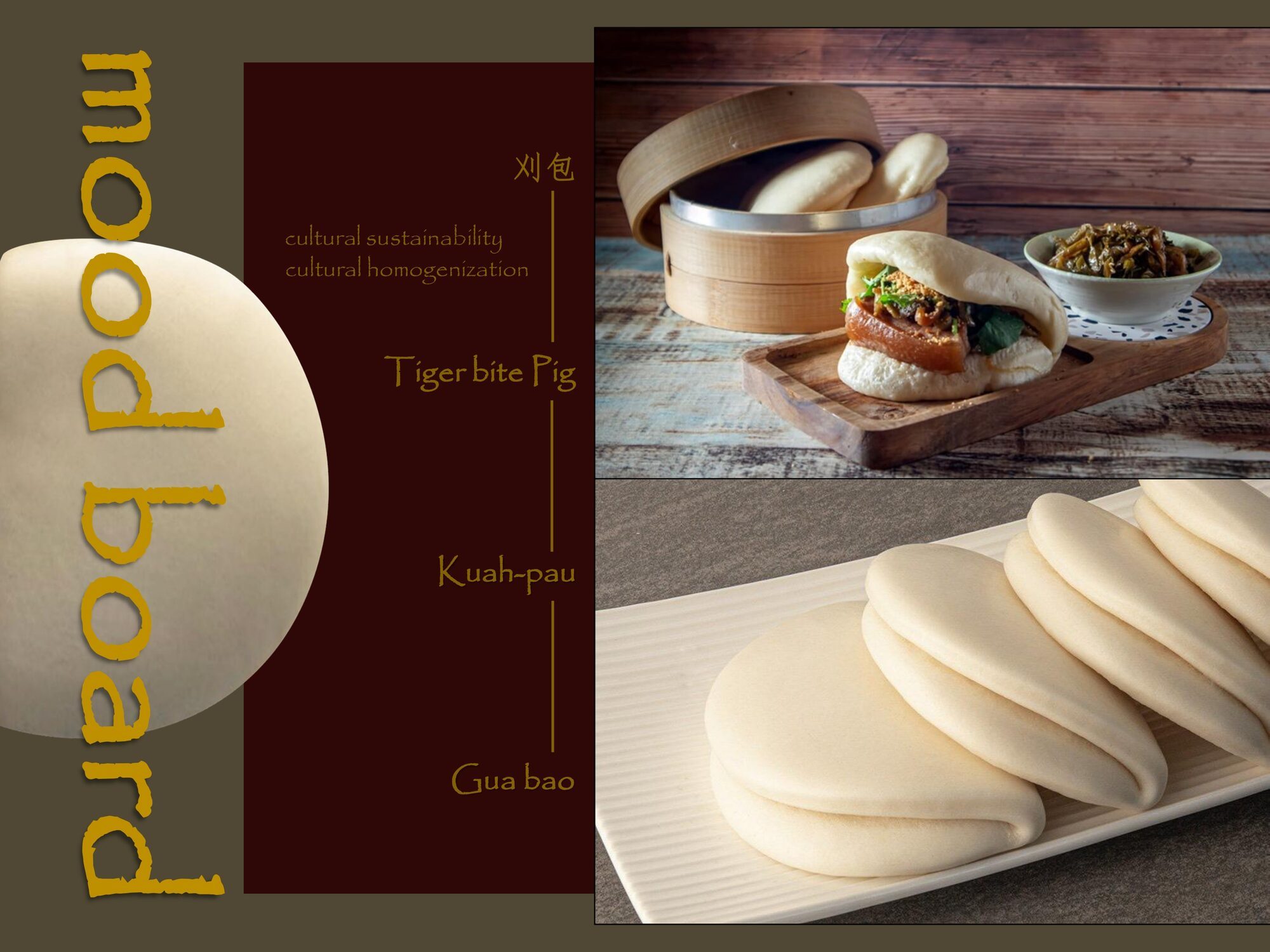
Inspiration: The inspiration for this project is derived from Kuah-pau, also known as Gua bao, a traditional Taiwanese food. The initial idea emerged from an ordinary moment in daily life. While deciding what to have for dinner, I happened to notice a snack placed on my roommate’s shelf, which led me to reflect on the country and culture behind it. This fleeting moment made me realize that many foods in everyday life actually carry distinct historical and cultural backgrounds. Although Taiwan is internationally known for its diverse cuisine, many dishes can still be traced back to the cultural context of Chinese culinary traditions. However, Gua bao has, through historical evolution, local adaptation, and renaming, gradually diverged from its original form and developed into a food identity that represents Taiwanese culture. This led me to recognize food as a microcosm of human history. Even when originating from the same cultural roots, food continuously evolves into distinct forms through time and regional differences. The transformation of Gua bao not only reflects the evolution of culinary culture but also reveals the formation of identity and localization. Therefore, I chose Gua bao as the inspiration for this project. Design Concept: Gua bao (Kuah-pau), locally known as the “Tiger Bites Pig,” serves as the conceptual foundation of this design. The linguistic meaning is translated into tangible structural and material expressions. The opening of the bag is designed using a frame clasp structure, symbolizing the biting motion of a tiger, corresponding to the “tiger” element. The main body of the bag is made of pigskin, representing the “pig” element. Through the use of materials and structural interpretation, the design strengthens the conceptual connection between form and cultural meaning. In terms of structure, the side profile is developed based on the folding logic of a wallet, forming layered contours that resemble the layered structure of a Gua bao filled with its ingredients, thereby echoing its structural characteristics. The surface of the bag is constructed using weaving techniques. The interlaced structure creates a soft and fluffy tactile quality reminiscent of the texture of Gua bao itself. At the same time, it symbolizes the interwoven and mutually shaping relationship between food and cultural history, further extending into the idea of cultural sustainability and diversity. In the context of cultural homogenization driven by globalization, culinary cultures are increasingly losing their local distinctiveness, while regional identities are gradually being diluted. Through this project, I attempt to use Gua bao as a cultural symbol of Taiwan, transforming a traditional food into a contemporary design object. By reinterpreting local identity through diverse modes of expression, culture continues to evolve within changing times, ensuring its continuity through transformation, and ultimately responding to the concept of cultural sustainability.
 Copy URL
 Login to Like 1