Optical illusion
Category: Accessories
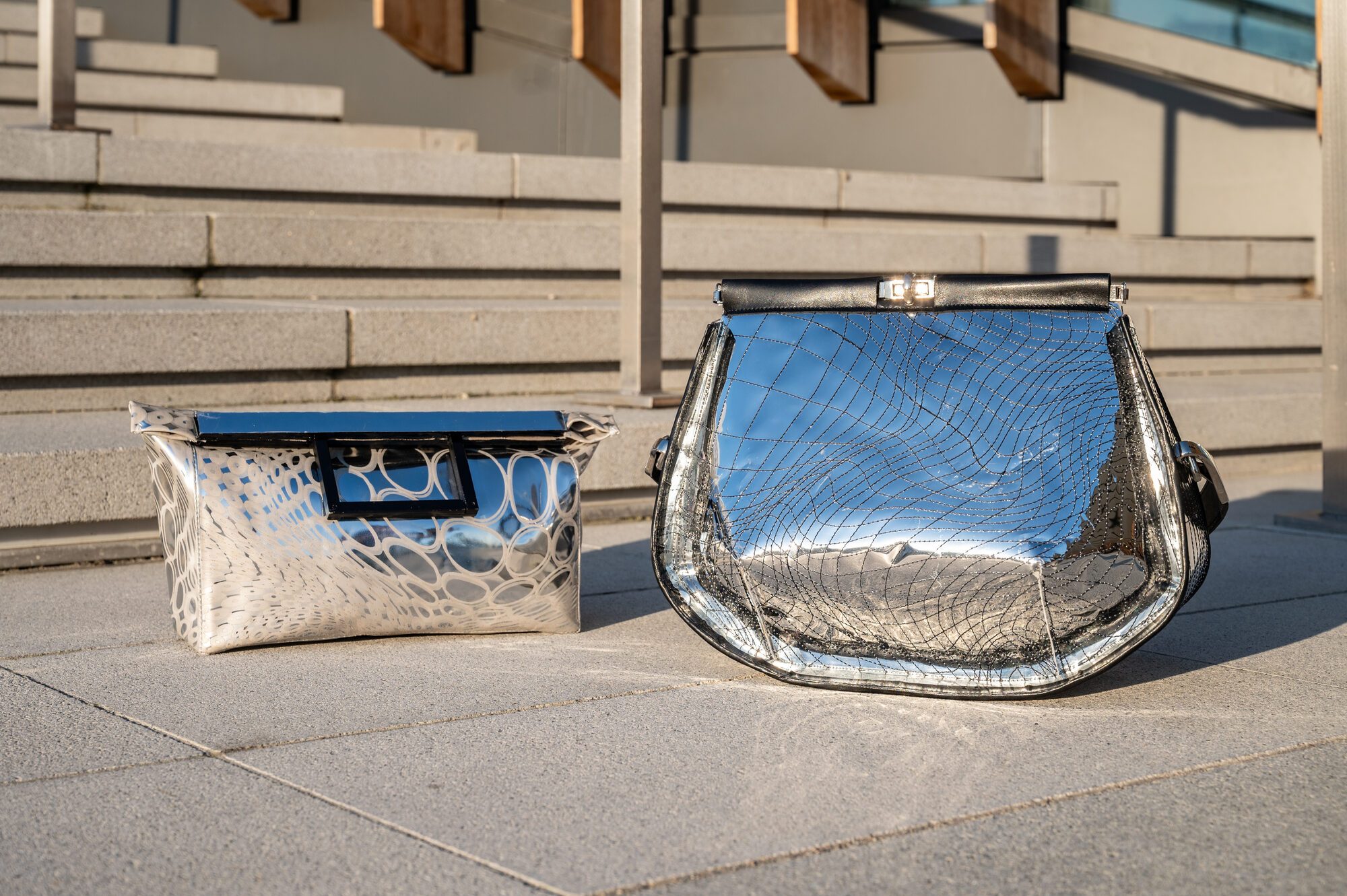
Perception, Illusion, and Reality in Design The relationship between perception and reality has fascinated me, and artists for a long time. As Lucian Freud observed, “The longer you look at an object, the more abstract it becomes, and, ironically, the more real.” This idea forms the foundation of a creative exploration of optical illusions and their application in contemporary bag design. Optical illusions challenge our understanding of reality by presenting visual information that differs from objective truth. Parallel lines may appear distorted, static images may seem to move, and flat surfaces can appear three-dimensional. These phenomena occur because perception is not determined solely by the eye; rather, the brain actively interprets visual information based on previous experiences and expectations. In its effort to process information efficiently, the brain fills gaps and recognizes patterns, sometimes producing misleading conclusions. This fascination with visual deception inspired the transformation of everyday bags into artistic objects that exist between function, fashion, and illusion. Through carefully designed patterns, and reflective surfaces, a two-dimensional appearance can be transformed into the illusion of depth and movement. The viewer is encouraged to question not only the form of the bag but also their own perception. The colour palette has been deliberately kept fairly understated so as not to distract from the visual effects. The colours range from off-white through shades of grey to black. This is inspired by the Op Art of the 1960s and also by the work of Op Art fashion designers of the time, such as Paco Rabanne, Pierre Cardin and Courrèges. The work is inspired by the Op Art movement, in particular by the pioneering works of Victor Vasarely and Bridget Riley. Through the use of geometric shapes, striking contrasts, the layering of different materials and visual distortions, they demonstrated that static images can evoke a sense of dynamism. Equally influential are reflections and mirrors, which distort and multiply reality, thereby creating infinite visual possibilities. Philosophical ideas from René Descartes further reinforce this exploration. His belief that certainty arises through thought rather than perception highlights the limitations of human senses. By combining illusion, reflection, and functional design, the project demonstrates that reality is often more complex than it first appears, inviting viewers to engage more deeply with the objects that surround them.
Download PDF 1 Copy URL
 Login to Like 0